07 September 2009

[Album Review] Eslam Jawaad - The Mammoth Tusk


The first question that Eslam Jawaad’s Debut album, The Mammoth Tusk, might raise is “what the hell does a mammoth tusk have to do with a rap album?”. The west-coast-mid-90’s sounding title track explains just this and illustrates the story behind the album and the man. According to the former Lebanese mafia affiliate turned rapper, the Russian mafia sold a Siberian mammoth tusk to a businessman in Dubai, who later on tried to sell it to a Syrian group which contacted Jawaad to dispose of it through the Lebanese mob. Eventually Jawaad, the middle guy who spent month setting up the deal, got cot off. And with that he apparently decided to move on to a different course and perused his music as a career. But how accurate is this story? Well, I guess we just have to take Eslam’s word for it.


With that out of the way, I should stress that the story that inspired the track and the album is not the most impressive part of the album. No sir! Jawaad’s surprising affiliations (with artists, not the Lebanese mafia) and the songs that are crowned with music house hold names like The Wu Tang Clan’s GZA and RZA, Damon Albarn from Blur and cyber-group Gorillaz, are enough to turn some tracks into instant hits, and even instant classics. Now add to that a talented Lebanese Syrian rapper and you have a debut album that can be viewed as a promise of a rapper bound for greatness.


The album opens with an appropriately danceable club song that shows exactly how interesting it can get when you get your hands on great music from around the world. The song was made into a comic book styled video that reminds us of Eminem’s Without Me. The song combines Middle Eastern melodies and some string hits that sound Arabian to the western ears and South Asian to Arabic ears. At the end of the video Jawaad is seen holding a sign that says “Told you it was hot. Buy my album”. Judging from this song alone, that’s exactly what anybody who saw the video would have expected. But the album as a whole is a little too disjointed, the highlights are great but the other parts are far from being 2009’s greatest hits.


Star spangled banner is a clever booty song that compares certain feminine characteristics with those of American states. The slow Jazzy instrumentals used on this track, the high-pitched trombone, and the nasal tone of Jawaad all help portrait a hilarious image of a perverted semi-intoxicated man spitting rhymes about a woman’s booty. Some lines in this track, like “I pledge allegiance to your ass”, should spawn some laughter.


Tickle My Pickle, like other tracks on the album, such as Trick is not too exciting. The domestic violence themed song that goes on with a seemingly sarcastic take is hardly the best song on the album. And the same goes to Leave it Alone, and Criminuhl. These aren’t bad songs. There are NO bad songs on this album, but there are songs that don’t leave a mark, and that feeling is enhanced by the contrast created by the highlights of this album compared with the less than perfect tracks.


The old-Skool styled Rewind DJ, on which Jawaad collaborates with no less than De La Soul, is an instant classic. The late (and great) Aaliyah’s vocals from “Try Again” are like the cherry on top of this cream pie. But you need to remember that a gourmet pie will never be fast food. You can sit back, relax and enjoy this track, but you wouldn’t enjoy shaking your arse to it as much. But seriously, who needs that? I’ll take a slow, and a bit too long, classic over the ass shaker any day.


The fast paced short running Babba’s Shotgun is something special. The strong drums go well with the deep voiced rapper’s calm yet aggressive style, and the sweet guitar hits suit the somewhat nostalgic tone of the track. The political commentary on this track (resisting the French colonial police in Jawaad’s grandfather's days) is applicable to the situation in some Arab countries today.


So Real is quite simply a great song. (Is it me or is every track that starts with rain sounds bound to be great?) The song features production by legendary Wu tang’s RZA, an introduction by Wu Tang’s GZA, and Shadia Mansour for the chorus. For those who have a thing for Shadia Mansour, like I do, this song, and this album is a real treat. This song is probably my personal favorite from this album. I say “probably” because I keep changing my mind since there are a number of great songs to choose from.


The Gorillaz inspired Alarm Chord with Damon Albarn is one of the crown jewels of this album, and is an answer for those curious about Jawaad’s abilities in his native tongue, and for those looking for some contrast and variety in musical style. The song is apparently inspired by Damon’s Gorillaz alter ego. It is different from anything else heard on this album, and anything else we’ve heard in Arabic rap for that matter. Jawaad’s flow on this track, especially in the opening verse, is beautifully melodized. With this song added to the mix, in addition the aforementioned So Real and Rewind DJ, choosing a favorite track gets really hard.


The bonus track, Beirut, is the second one in Arabic. It’s actually a song I’ve heard before on Youtube, while looking for videos of Shadia Mansour. It’s a song that I already know and like. But speaking of Shadia, I do miss her rap verse from the version I’ve heard before. I’m not entirely sure whether that verse was originally a part of the song at some point, but that’s the way it seems. And if that’s the case, the pre-edited version sounded better. Either way, the song is good. It could have been a great song if it weren’t for the “Madeannett Beirut” bridge before the second verse where Shadia’s verse used to be. And I could do without the intro. I still see the song as a whole as a good and solid one.


With that I shall finish and sum it up and add that the album is a great debut album. Eslam Jawaad is one of the greatest Arab rappers, and has reached levels that Arabic rap in general is yet to reach. Some songs are not the catchiest songs you’ll hear in 2009, but some songs, which I’ll list, are just bloody awesome.


Editor’s picks: Pivot Widdit, Rewind DJ, Babba’s Shotgun, So Real, Alarm Chord and Beirut.


Sammy Hourani for Arabic Hip Hop Headz
September 2009


Rate: 3.5/5.0


Read more...

21 August 2009

[Album Review] Arabian Knightz - Desert Saga Vol. 1


The release of this mixtape came as a surprise to me. Arabian Knightz did not make any official statement in regards to releasing it, or even regarding working on a mixtape for that matter, up until two weeks prior to the release date. And indeed the mixtape, “Desert Saga Vol 1” , was released by the end of 2008, on the 25th of December to be precise.

I think that Arabian Knightz had many reasons for which they decided to make this mixtape; inter alia, AK intended to keep in touch with the hip-hop scene and maintain constant presence. Another reason might be wanting to provide the ever starving fans with something to taste and digest until the release of AK’s long awaited album, “Unknighted States of Arabia”. Another intention behind the release may be supporting local rappers within the Egyptian hip hop scene like Wighit Nazar and Mc Amin. And I think Amin was the one who profited the most from releasing this mixtape as he proved his mastery and skillfulness, and he added a special flavor to the mixtape. I feel like it’s even safe to say that Mc Amin shines brighter than AK themselves on this mixtape especially with him being featured on more than half of the tracks.

Despite the slightly low sound quality, the quality’s still plausible. The track themes vary from love and betrayal as seen in “Edeeny” and “Betrayl”, to political subjects like in “Electric Chair”, social subjects as in “Ghaza” and religious ones like in “La Ilaha Illa Allah”; and there are several bragging tracks as well.

We shall go over the hot tracks on the mixtape, and one of which is “Da Knightz”, the first song after the intro. If you don’t care much for Sphinx’s, Hoss’ and Rush’s lyrics, you will probably be impressed by the beat. And if it weren’t for the drum sounds (Tabla) in the chorus the beat would have been PERFECT. It should be noted that the Alladinish beat is by Palestinian rapper and producer Rami GB.

Next is “The one” by E Money, Rush, Mc Amin and Sphinx. Each of whom does a perfect job rocking this song. Tuning in to Amin’s verse on this track is a must! I should add that the tight beat is by Nimrod (a producer of whom I have not heard before, my guess is he’s not an Arab).

Next is “Electric Chair”, featuring the same bunch from the previous track, and produced by Nimrod as well. I personally enjoy this style, and to give you a hint of what I’m talking about I’ll suggest that you listen to Sphinx’s verse and I’ll leave it at that.

Now we address “Efham Rakkez Esma3”, which I consider to be one of the most distinguished tracks on the mixtape. Mc Amin, E Money, Yasser of Wighit Nazar and Gad of Asfalt all rap proficiently on this track, and both Mc Amin and E Money are just too hot to come close to in terms of flow. Both rappers are distinctive throughout the mixtape’s tracks especially in “Efham Rakkez Esma3”, “Follow me” and “Wa7ed”.

Spectacular and smooth beats were manifestly chosen for this mixtape… beats that represent real hip-hop at its best. But, unfortunately for Arabian Knightz, a lot of those beats aren’t their own. The beat for “Efham Rakkez Esma3” for example is actually Necro’s, and the one used in “Follow Me” belongs to an American rapper named Ahmad.

In the end, a couple of small notes should be added: Rush’s voice can be annoying in some tones, but not as much as that of 4Fifth. Also, Iron Curtain produced two tracks for this album, but I think that he is somewhat overrated. And finally, the artwork for the Mixtape is really incredible; Solo (the cover designer) is obviously very gifted.

The mixtape includes a lot of great tracks, and is certainly worth more than 6 lousy bucks.


Arabic Hip Hop Headz
August 2009

Rate: 3.0/5.0


Read more...

15 August 2009

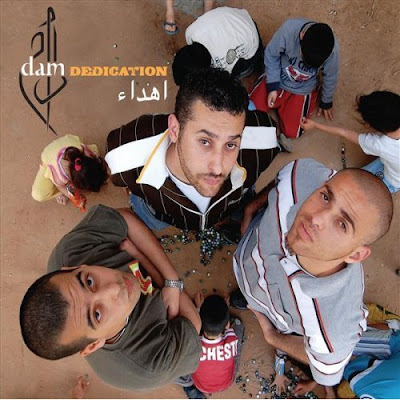
[Album Review] DAM - Dedication (Ihda')

Click Here To Read The Full Post

I remember clearly the first time I heard about DAM’s (at the time, upcoming) debut album, Dedication (Ihda'). It was back in 2003. I remember being on the edge of my seat, just waiting for it to be released. Great things for Arabic Hip-Hop are about to go down, I thought. But two years passed, and I never heard of the promised album until 2005, when the first single from the album "Ya Sayidati" (My Lady) was released to the masses, and DAM’s official website was opened and ready to market it. Two extra songs were leaked and freely roamed the internet "Mali Huriye" (I Don't Have Freedom), and "Ghareeb G'areeb Fi Bladi" (Stranger in My Own Country). But then again, both songs in addition to "Ya Sayidati" (My Lady) were featured on DAM’s website anyway.


Finally, in 2006 Ihda’ – DAM’s debut album – was released after being five years in the making (according to DAM). DAM were still at the time, alas, prohibited from entering Arab countries, and so was their album in some cases. So the only solution was to distribute it via the internet and indeed it was available in mp3 form on DAM’s official website (www.dampalestine.com).

Ihda’, generally speaking, consists of Consciousness Raising Hip Hop and Political Hip Hop. And that’s just business as usual for DAM, of course. The intro starts with an intense speech made by the late Egyptian president and Arab leader, Jamal Abd El-Nasser, which is backed up by a dope beat made by the Israeli producer DJ Ori Shochat. (I’ll have some chips with that irony, thank you). Scratches provided by DJ Alarm.

Now let’s go over the album tracks, shall we.

The second track, titled “Mali Huriye" (I Don't Have Freedom), like I mentioned before, was among the singles leaked to the internet. My guess is, it was one of the first songs to be recorded since Suhell (and that’s no typo) was still doing it in his old style. As in he’s still rapping as opposed to his later Reggae phase. But that’s just my guess, and I don’t think he completely abandoned his older style (as I learned from listening to some new tracks –live- from their upcoming second album).

The track is politically themed, as it focused on the freedom taken away from Palestinians, and on The Separation Wall. The chorus is performed by Anat Ig'bariye. The ending features a poetry bit, performed by a little girl. The song in general is one of the best on the album, and the same can be said about the beat. Composer: Ori Shochat.

The next track, "Ng'ayer Bukra" (Change Tomorrow), is aimed at the next generation. It features children performing the chorus. The beat features a sample taken from an old children’s show “Eftah Ya Simsim”. It can be said that the track’s theme is taken from Nas “I Can”, but it’s not like Nas has a monopoly over featuring children in rap tracks. Also, the track talks about hatred and racial discrimination in the Israeli-Palestinian context. The next verses, by Mahmood Jrery and Suhell respectively, advise children to hold on to their Arab nationality and their Palestinian roots. The tracks end with a hopeful tone, and a wish that the next generation will change the course of things, and will not go make the same mistakes being made today.

In the forth track, “Warde” (Flower- Slang For Bother), DAM leave the political issues for a while because it’s time to show off some skills. The song features Jamil Naffar (The Naffars’ younger brother) and Palestinian rapper Sameh Zakout aka SAZ. The latter opens the song with a laid back style that does not characterize him. A good verse nonetheless. Tamer opens the second verse that follows the chorus (which I took a liking to) performed by Suhell and apparently Jamil too. Tamer’s verse is truly a masterpiece of flow, wordplay and it ends with a hell of a punchline. The next verse is performed by Jamil. Back at the time when I first heard it I thought that it must have been written by a DAM member, or at least with someone’s help. But after listening to Jamil performing in person I must say that it might not be the case.

Jrere takes it from here and tells his story with DAM and rap music, but he somewhat fails to suit his verse to the rest of the song, vivacity-wise, and that’s not our Mahmoud at his best. (He does, however, make up for it in his “Kalimat”; See below).

It’s a known fact that Suhell has been leaning towards Reggae music and starting to experiment with it while making the album. This next song, the 5th track, Inkilab (Revolution), is basically Suhell doing his thing, experimenting with the new Jamaican toy. In all honesty, it’s not the best Reggae song ever, but I do have a special liking to it, for one reason besides the chorus: It’s a door opener. Revolution is in every aspect musically revolutionary. It is clear that Suhell is still experimenting with this thing, but we will surely be hearing from him in the future.

And now we’re off to the contradictions department of the album. Like I mentioned before, "Ya Sayidati" (My Lady), a love song, was the first to be released from Ihda’. Now here’s what I thought when I first heard the song, months before I got the album: I didn’t care for it one bit; simple as that. And that was not because the song is bad, per se. On the contrary the song has good lyrics, is affected by Nizar Qabbani’s poetry, and the chorus is performed by Suheil Fodi. Basically, nothing is missing from the song, expect maybe DAM. I’m all for thematic variety but the song seemed very unlike anything I heard from DAM before. But that was not my problem. My problem was releasing this song fist, which seems like a publicity stunt. Not only that! No! It was THE song made into a video clip to be played on music channels. I think DAM wanted the album to sell so they chose the most “pop” song in the album to be made into a video. In my opinion, that was a big marketing mistake. DAM are loved for their Non-pop work, for their strong political message, and for their sincere lyrics. To be honest, until this day, I usually just skip the 6th song.

Now, remember everything I said about the 6th song? You can pretty much forget it because the next track makes up for some of the unrefined bits in the album. The 7th track is titled “Al Huriye Unt'a” (Freedom for my Sisters - or Freedom is female if you want to go for the literal translation, as nouns in Arabic are associated with genders and “freedom” happens to be female). The first thing that made me fall in love with this song is the background with female vocals at the beginning, but that’s just the beginning.

The topic is women in Arab and Muslim societies- a sensitive issue. Tamer on this song promotes an open minded, and a fair take on women’s rights, and women’s freedoms in our society. The lyrics are deep and clever, as they play on noun genders in the Arabic language. Tamer ends the song with “It’s funny how we deny females their freedom, when freedom itself is female”. Again, clever wordplay, and a very deep song.

The song features female rapper Safaa’ Hathout, who does the second verse, and shares her take on the issue from a personal point of view. The song in general is just amazing, fresh and truly original.

The next song (the 8th) brings the the album to a down slope. “Da DAM” which DAM see as their concert signature, is merely a head banger. It has a nice flow to it, but not a whole lot of coherent lyrics. I would like to dance to it, probably. But that’s just about it. The song features a sample from “Madrasat al Moshaghebeen” – an old Egyptian play. The beat is composed by Karem Matar.

Now, the next song I do like lyrics wise. The 9th song, titled “Hibuna Ishtruna” (Love us and Buy us), is a clever song taking the piss out of the seemingly eternal curse of anonymity of Arab rappers. DAM takes the piss out of Arabic rap’s lack of popularity. (at least in comparison to Haifa. And to those of you unfamiliar with her, I don’t mean the city). The message behind the song is simply “buy this album. Support us. Pretty please!”. Or as DAM put it “Love us, buy us”. The song is seemingly meaningless, but if you take a closer look at it, it’s just DAM being sarcastic about their own experience. The song features samples from Samira Tawfeeq’s “Al Ein Molayyitain”. This track was composed by Ori Shochat.

The next song, the 10th track, is “Mes Endroits” (My Hood). To put is simply, it’s a great song. The eastern vibe of the violin and oud play freely on the laid back beat, carrying a feeling of authenticity with them. The song features the French rapper Nikkfurie from French rap group La Caution. Although, I must say, featuring him got me thinking about DAM’s choices on this album. Nikkfurie was the only rapper featured from outside of Palestine, and it seemed a little weird also that he was featured on this song. But then again, it would be a nice try to present the struggle of people in the hood as an international tragedy, in Palestine and in France. The song mainly talks about how it is in the slums of Lid, the city where DAM come from. The song uses a sample from Fayrooz’s “Al-Bent Alshalabya”, and is composed by Karem Matar. I must add, this song is among the best on the album.

The next song, “Usset Hub” (A Love Story), is a solo performance by Tamer. And believe me, ladies and gentlemen, you do not want to skip this one! The song is made to sound like a love story told by Tamer to his girlfriend, as things happen with them and he changes tones during the song. At the beginning, she calls him as a frightened adolescent who does not want their parents to find out about him, and they’re both excited about being in love. At the end she calls him and they both sound weary and tedious from life, from their phone relationship and from society. She drops the bomb, someone asked for her hand in marriage and she “had to tell her father about Tamer” and the old man of course was very understanding! If Tamer was serious about this he should propose, or hit the road!

Tamer’s style on this one is admirable, and I didn’t really mind being interrupted by the phone calls. The song is about the pressure that parents put on youngsters in relationships, and pressure to get married, lack of understanding of the nature of relationships. It’s just harsh reality being told in rap form. The song features Ibrahim Sakalla, DAM’s prominent guest and close friend, who plays the role of Tamer’s friend at the end reminding the crushed Tamer of the guys’ night out plans. The Kanoun styled beat is composed by Ori Shochat. This song is, of course, recommended.

The tracks are getting better by the minute now. The 12th song “G'areeb Fi Bladi” (Stranger in My Own Country) is one of my favorite Dam(n) songs ever; certainly my favorite on this album. The song’s theme is political. It features a poem by Tawfeeq Zayyad as an intro. Mahmoud opens the song with a strong verse that talks about Israel’s discriminating policy in regards to its Palestinian citizens, and about his harsh feeling of alienage in his own country. Suhell does the second verse in his old style, which either means it was among the early songs on the album, or simply that the Reggae style doesn’t fit the theme (especially if others are rapping). Suhell talks about how Israel treats him as a Palestinian while Palestinians treat him as an Israeli and as a traitor. Tamer ends the song with a genius verse in which he mentions the names of the 13 martyrs killed during demonstrations in October 2000, by Israeli forces. He uses their names as verbs and nouns put together into a verse, in a way I have not witnessed before. Amal Bsharat performs the Chorus. And the song ends with bits of Tawfeeq Zayyad’s poetry. Composer: Ori Shochat.

The 13th track is “Kalimat” (Words). This is Mahmoud Jrere’s solo performance right here. Jrere talks about how he takes pride in his words and he bestows us with the feeling that he’s the man upstairs with the strings playing with words like puppets. What I like about this song is a feeling that I missed from the rest of the album, the DAM that I grew up to. But this song certainly satisfies the need as it also uses samples by some of Dam’s older songs. The beat, by Ori Shochat, also contains a sample from Fayrooz’s “Habbaytak Be Alsayef”. This song is certainly recommended as well.

The 14th track, “Sawa' Al Zaman” (Driver of Fate) is a song with a desperate romantic take on life. In the song, the rappers are in a car with the “Driver of Fate” constantly asking him to take them to the seemingly impossible. I will not dwell on how this song is great, but it’s worth buying the album just to listen to it. Composer: Eddy Somiran.

The final track is a bitter sweet personal Dedication (Ihda’) to all those who supported DAM - a good song indeed. The song features Ibrahim Sakalla, and is composed by Ori Shochat.

In summary, if you know DAM, you will like this album. You can certainly see great progress and change from their earlier work. Da Arabian MC’s are professionals and that’s that. But if you grew up listening to them you might miss some of the street vibe from their earlier songs (something which will be made up for, as far as I can tell, in the next album).

Even if you have downloaded the songs somehow, you should buy the album to make sure DAM keep progressing and getting better (and hopefully not bitter) like fine wine. I mean who among us wouldn’t like to be provided with high quality Arabic rap, and possibly some Reggae on the side?

Arabic Hip Hop Heads
August 2009


Rate : 4.0/5.0


Read more...

keywords

9achla muslim l3arabe don bigg salah edin arap cilvaringz eslam jawaad ledr p mc palestine lotfi-dk lotfi double cannon black bannerz o-marz


keywords

hharabe arab rap arabic hip hop arab league rush sphinx e money mc amin f-killa shadia mansour dam ramallah underground we7 dj lethal skillz malikah mc moe zoog FareeQ el Atrash

  © Free Blogger Templates Autumn Leaves by Ourblogtemplates.com 2008

Back to TOP